CAVU Café: Royboy’s Prose & Cons, Page 4 of 17 The views expressed in CAVU Café: Royboy’s Prose & Cons blog are those solely of the writer and are not necessarily shared by the Aviation Suppliers Association or the Association’s staff, members, or Board of Directors. About Roy Resto LACK OF ROOT CAUSE ANALYSIS FOR AUDIT FINDINGSPosted By Jeanne Meade | October 01, 2023
Last year the ASA recorded 41 Repeat Findings during audits. What behaviors (or lack thereof) contribute to the likelihood of new or repeat findings? I was recently in a hotel listening to the local news broadcast. An area leader was celebrating the now wide-spread availability of Narcan in the community, Narcan being the medication used to help save those who are experiencing an opioid overdose. Narcan has been very successful in bringing down the rate of deaths due to opioid overdoses. In the news story there was plenty of high fives and back slapping for admittedly the good news of the availability of this important lifesaving medication, but there was nary a word about the community’s epidemic of opioid addictions, and what, if anything, was being done to address it’s causes. This issue, as with most social issues, are glaringly devoid of Root Cause Analysis. Regarding Root Cause Analysis, herein RCA, a common quote goes like this: 
As an auditor of various Quality Systems, it has been observed that many Corrective Action Procedures contain a provision for Root Cause Analysis, but upon examination the RCA section appears superficial - the person(s) processing the NCR (Non-Conforming Report) or CAR (Corrective Action Report/Request) is mostly focused on fixing the noted discrepancy but not on the Root Cause. That’s disappointing because it is well known that failure to fix the Root Cause greatly increases the chances that the noted issue will repeat itself. To be clear, the intent of this article is not to teach you about all the RCA methods, because literally many books and training courses address this in detail, but to bring to your attention the usefulness of this technique to really crush those troubling NCRs which may or may not be repeat offenders. Nonetheless, a quick primer on the topic follows. So, what exactly is RCA? According to the ASQ1: “A root cause is defined as a factor that caused a nonconformance and should be permanently eliminated through process improvement. The root cause is the core issue—the highest-level cause—that sets in motion the entire cause-and-effect reaction that ultimately leads to the problem(s).” “Root cause analysis (RCA) is defined as a collective term that describes a wide range of approaches, tools, and techniques used to uncover causes of problems. Some RCA approaches are geared more toward identifying true root causes than others, some are more general problem-solving techniques, and others simply offer support for the core activity of root cause analysis.” If you were a full devotee of the topic, you would have been introduced to the many methods available to perform the analysis such as: 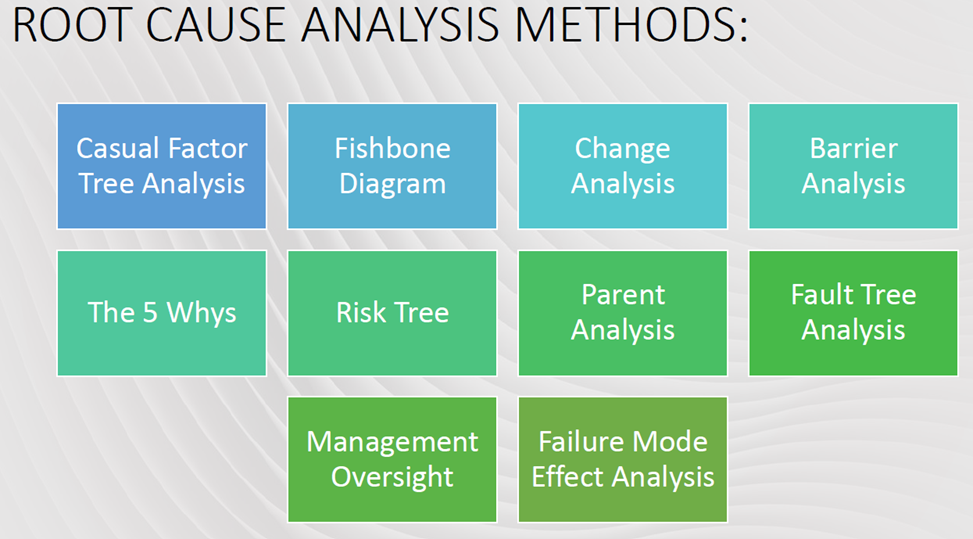
Notice the 5 Whys method. For firms seeking an easy to use and understand method, the 5 Whys seems to be popular. On the ASA website for ASA-100 audits is an example of how to perform and enter Root Causes on intelex responses. This one is for a self-life part which was not on the self-life tracking listings2: 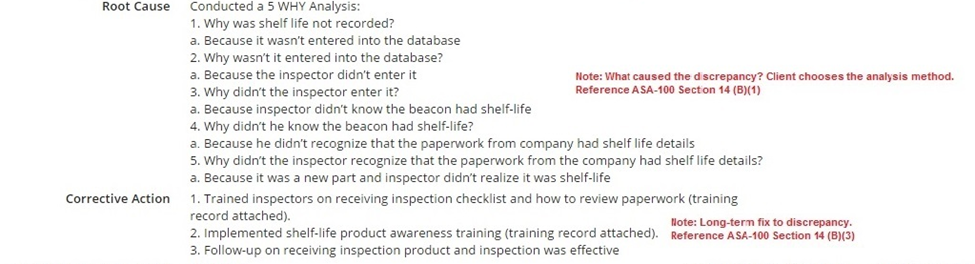
The key to successful 5 Why analysis is to be brutally frank and do not stop the ‘why’ questions until the answers have been exhausted; it may be more, or it may be less than 5. An organization held in the highest regard for root cause identification is the National Transportation Safety Board, NTSB. They perform their analysis and investigations with the singular focus of identifying the root causes of the accidents. There can be no question that their stalwart analyses have made significant and profound contributions to the level of safety we enjoy today. Indeed, they perform this in an atmosphere usually charged with external parties exhibiting emotions, and who have parochial interests, and who wish to protect their constituencies from criticisms or other actions, but the NTSB remains neutral and focused. Bravo NTSB… Over ‘n out Roy ‘Royboy’ Resto www.AimSolutionsConsulting.com TRACE TO GOVERNMENT OR MILITARY? SO WHAT?Posted By Mat Meyer | August 01, 2023
Your customer has an urgent need for hard to find new Hi-Lok fasteners. You finally locate some New Surplus parts, but your source shares that the trace is to government military stock. Your customer’s Jurassic policy is that they will not accept any parts with trace to a government/military source period, so their aircraft languishes for lack of parts, and they will pay a lot more waiting for the commercial sources to get stock. Is this policy in the best interest of their fleet and budget? We’ve all seen the wording on certifications which state variations of the following: “The undersigned certifies that the part(s) listed above were not obtained from a US Government or Military Source…” “The part(s) was/were not previously installed in a public aircraft, such as a government or military use aircraft…” What, do these parts have leprosy? And therein lays the basis for this discussion. Existing guidelines need to move beyond the black and white blinders in effect for this type of trace. Most importantly, keep in mind that there is not one regulation that prohibits the use of parts traced to government or military sources. So, when should we be concerned, and when does this not matter? WHEN IT DOES NOT MATTER:
WHEN IT DOES MATTER:
An interesting sidebar twist (before anyone wags their finger at me) is the C-130. Its civilian version is the L-100 series aircraft. For the L-100, there is a document which states that in most cases the maintenance manuals to be used for this civilian model are TOs, not CMMs. By the way, the most conspicuous indication that a part may be dual use is that it is exactly the same part number. This is an example of a Dual Use Part which in this case is used on a C-130H when I took the picture. Note the TSO number marking per FAR 45: 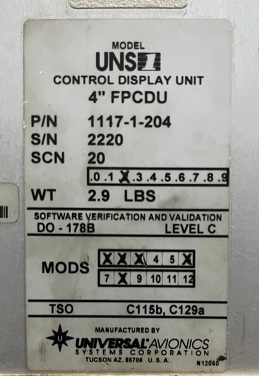
There was a time…
Today we see a shift to the more enlightened Incident Clearance Statement (ICS) whereby, and I paraphrase, that even if the part had been removed from an incident or accident aircraft, its airworthiness has since been established.
The obvious inference is that industry evolves from rigid paradigms when common sense prevails. Maybe it’s time for this same common sense to be applied to parts traced to government or military trace. Over ‘n out Roy ‘Royboy’ Resto AIRLINES: Now Is The Time To Choose Lessors Who Accommodate PMA And DER RepairsPosted By Jeanne Meade | June 01, 2023
The fact that airline operating expenses have recently risen is well published, and led by major factors such as fuel and labor which historically have accounted for the biggest portion of operating expenses. Closely on the heels of fuel and labor are the expenses for maintenance, repair, and overhaul (MRO) of which the cost of parts, repairs, and overhaul have risen disproportionately compared to common economic indices such as Inflation and the Consumer Price Index. I wrote about this likely phenomenon in an article titled “Airline Maintenance Costs Will Go Up” at this link: https://www.aviationsuppliers.org/AIRLINE-MX-COSTS-WILL-GO-UP Directly contributing to this atmosphere are many OEMs who continue to wield their monopolistic positions in the manufacturing and MRO marketplaces. This has been carefully heralded in the article above which points further to other supporting articles. High prices, parts shortages, and long lead times; is the industry sitting back idly licking their wounds or are there any countermeasures in play? Yes, the emerging countermeasures at play include the following: • Use of PMA alternative parts • Use of non-OEM repairs such as DER Repairs (Designated Engineering Representative) • Use of parts from disassembled aircraft, engines, and APUs (Auxiliary Power Units) • Use of owner produced parts I have noticed a quiet increase in the use of owner produced parts as operators develop efficient and approved methods to implement this alternative. Similarly, disassembly of aircraft, engines, and APUs is rising in popularity thanks in part to the championing efforts of AFRA, the Aircraft Fleet Recycling Association (see https://afraassociation.org/). On the other hand, it continues to be surprising that PMA and non-OEM repairs such as DER Repairs have not accelerated for these clearly airworthy and approved solutions. By the way, MARPA, the Modification and Replacement Parts Association continues to be a staunch industry advocate for PMA parts (see https://pmaparts.org/). The key question to ask regarding the apparent sluggish growth of PMA and DER Repairs is y tho, since the industry is clearly clamoring for more PMA and DER repairs as reflected in the article ‘MRO Americas: “Unprecedented PMA and DER Demand”' 1. It appears that a key impediment to this comes from the Leasing firms (the Lessors). You’d be forgiven if you were surprised that Lessors can wield this type of influence but consider that approximately 50% of aircraft and 80% of engines are owned by Lessors, and these numbers are growing. Since it is the Lessors that own these assets, they can dictate the terms of the leases to the operators, and this includes restrictions on the use of PMA and DER repairs (non-OEM repairs). 
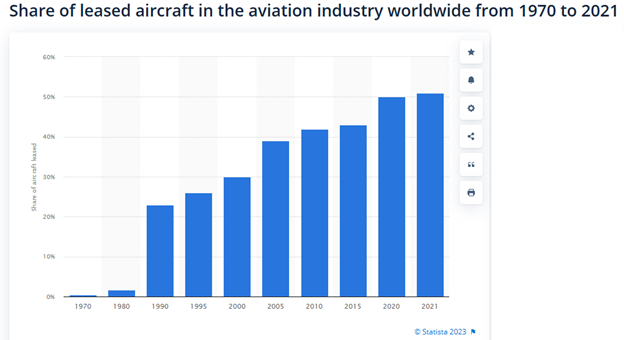 In fact, ‘Even with the COVID-19 pandemic, the aircraft leasing market has found a way to keep growing. The latest report called “Global Aircraft Leasing Market (By Aircraft Type & Region): Insights & Forecast with Potential Impact of COVID-19 (2022-2026)” shows an expected growth at a CAGR of 7.8% during the period spanning from 2022 to 2026, with the global aircraft leasing market forecasted to reach $247.41 billion in 2026’ 3. All of this begs the question, why are there restrictions on PMA and DER repairs? When asked, the common comeback is that use of PMA and DER repairs lessens the resale or redelivery value of the asset. I researched and asked for the quantitative data supporting this and guess what? Crickets. In the absence of quantitative data and analysis, the idea that these practices will affect resale and redelivery values makes it a perception, not a fact. There, I said it and I meant it. We must have clearly established in our minds that for operators, the use of PMA and DER Repairs represents opportunities to mitigate rising MRO costs. A recent article ‘The DNA of PMA & non-OEM repairs and cost savings’4 summarizes this very well. So, if this is clearly the case, what can airlines do? • Choose lessors who will accommodate PMA and non-OEM repairs. Due to the aforementioned financial attractiveness of the Leasing market, there has never been more numbers of lessors available. Globally there are 153 lessors3, and the list is growing. It is my opinion that the number is greater than those 153 cited since I’m not convinced that the list covers smaller sized lessors with limited portfolios. Nonetheless, this represents a considerable choice for lessees; include the availability to use PMA and non-OEM repairs in your decision-making process. • Renegotiate existing agreements. “Recently carriers such as American Airlines, Delta Airlines, and Copa Airlines have reportedly ditched lessor no-PMA clauses and covenents”4. 
Over ‘n out Roy ‘Royboy’ Resto www.AimSolutionsConsulting.com 1 https://pmaparts.wpcomstaging.com/2023/04/20/mro-americas-unprecedented-pma-and-der-demand/ 2 https://www.statista.com/statistics/1095749/share-leased-aircraft-aviation-industry-worldwide/ 3 https://www.aeroclass.org/aircraft-leasing-industry/ 4 The DNA of PMA and non-OEM Repairs and cost savings; Aircraft Commerce; Issue No. 145; December 2022 / January 2023; page 23 As Is, As Removed (AR), Serviceable (SV), Repairable, and Factory New (FN)Posted By Jeanne Meade | April 01, 2023
It’s time once again to dive into the murky world of undefined terms with my professor’s hat properly donned. By undefined I mean the that the term is not clearly ensconced in regulations or standards. AS REMOVED: With the rise in popularity of aircraft and engines being disassembled to harvest parts for a supply-chain starved market, the use of the term ‘As Removed’ has come into effect, and this is really the genesis of the term. The moment the part is removed from its next higher assembly, its condition is deemed As Removed or AR. AR Infers that the part is being represented as an unserviceable part whose airworthiness must be reestablished before it can be installed on an aircraft. Discussion:
AS IS: Implies the part is being sold in whatever condition or state it’s in. In the aviation industry this usually means there are trace and/or documentation issues and/or condition issues. Note that it is not contrary to any regulations to buy or sell parts in As-Is condition as long as the known circumstances are clearly represented. The installer has ultimate responsibility to determine the part’s airworthiness and suitability for installation. As stated in the As Removed paragraph, the term As Is appears to have fallen into disuse in favor of the more palatable AR term. If so, Royboy thinks this is unfortunate since in some cases it appears the seller is trying to cloak something…there, I said it and I meant it! SERVICEABLE: The term has come to have two meanings:
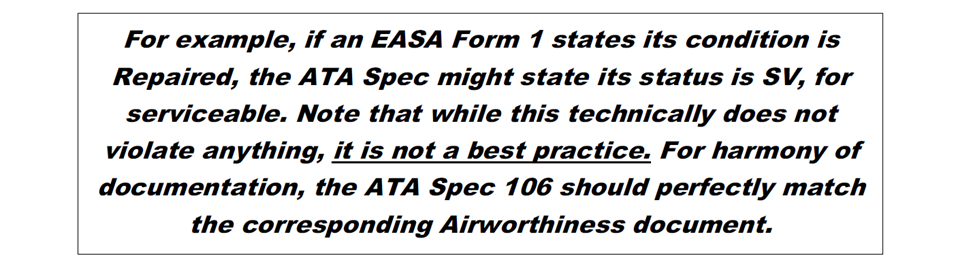 FACTORY NEW: This term does not have any regulatory definition. Its de-facto use in the industry, however, implies that the part was recently obtained directly from the OEM. Discussion:
Some of this comes from a document I make available for sale titled “Trace And Airworthiness Training Manual” (a shameless plug). Over ‘n out Roy Resto Post-Pandemic Pax PatternsPosted By Mat Meyer | January 31, 2023
The latest overused term circulating among the media is “New Normal”. Everyone, in every field is looking for signs of what may emerge as post-pandemic patterns of behaviors, and particularly whether these behaviors are temporary or permanent – a new normal. This makes sense since long term adjustments in business models may have to be made, and so it is with airlines and their passengers (airline shorthand – pax) returning to flying. If you’ve done any amount of flying since the pandemic, it’s instantly noticeable that the flights seem to be fuller than was normal; the load factors are higher. This prudent approach by the airlines reflects a careful return to flying to keep profits as high as possible following the hemorrhagic losses of the covid period. This prudence is manifested by cautious management of capacity which is the number of seats being made available as measured in ASKs, or Available Seat Kilometers. Too much capacity or ASKs, historically has led to damaging price wars to fill seats, lower load factors, and overall diminished profits. Also, tamping any temptation to add too many ASKs is the non-availability of spare aircrews and other airline personnel. So, who is now filling up those seats? Prior to the pandemic the marketing models utilized to segment the pax population was well established and mature; for example, the numbers of business and leisure travelers in what markets with seasonal adjustments. The question now being asked is whether the current high load factors are manifestations of pent-up demand, and therefor a bubble, or whether traditional ratios of business and leisure travel are exhibiting new models. BLENDED TRAVEL Here’s a new term to add to your lexicon, blended travel. Blended travel mixes elements of both business and leisure travel. It is attributed to the popularization of remote work and particularly hybrid arrangements whereby employees work remotely with frequent in-office meetings which in many cases requires air travel. This business travel frequently results in extended stays or tack-on destinations for leisure purposes, thus the blended travel.
Another major airline reported that in a recent quarter blended travel demand accounted for about 45% of passenger revenue compared with only 25% for traditional business travel1. CABIN RECONFIGURATIONS If blended travel is a new normal, look for changes in cabin configurations. It turns out that blended travelers are less likely to opt for premium first-class seating but more than a few would take the economy-plus or business seating, so look for fewer first-class seats and more of those variations on economy-plus and business accommodations. This too bodes well for the airlines since this equates to more seats. CHANGES IN PEAK AND OFF-PEAK TRAVEL Another welcomed alteration is in peak and off-peak travel. It used to be fairly predictable that business travelers got out on Sundays and Mondays, and returned on Fridays, with mid-week and Saturday being a good day for leisure travelers. With blended travel, flight demand is more evenly distributed across the week. This equates to more efficient and productive use of fleets. CHANGES IN HUB ACTIVITY I’ve characterized this article as taking place in a post-pandemic setting, but it is clear that the effects of the contagion continue to exhibit symptoms and hot spots, and that there are still lingering or contingent restrictions globally. Passengers with needs to travel internationally seem to be purposely avoiding destinations or hubs with perceived onerous procedures. One such hub which has exhibited marked declines in activity for example, is Hong Kong. For anyone traveling in the Asia Pacific (APAC) region, it used to be very common to transit through Hong Kong, but as the article “Has Hong Kong Airport lost its status as Asia’s super hub?”2 suggests, look for demographic changes in hub dominance in the APAC region. Singapore has seen a noticeable increase in hub activity seemingly attributable to Hong Kong’s malaise. WHERE ARE WE GOING NOW? 2023 seems to be the year everyone is predicting that airlines will return to profitability. According to the article “How will the global airline industry look in 2023?”3,
The affects of inflation and higher fuel prices are likely to have a moderating result on these forecasts. Regionally, South America and Africa are not yet expected to see profitability in 2023, while North America is expected to be the global profit leader. Over ‘n out Roy ‘Royboy’ Resto AimSolutionsConsulting.com 1 Legacy Carriers React to Shift Toward Blended Travel; Aviation Week and Space Technology; November 7-20, 2022; Page 28 International Airline Technical Pool (IATP)Posted By Jeanne Meade | December 01, 2022
International Airline Technical Pool (IATP) By Roy Resto It was a wintry, snowy, dark night at the airport (I know that sounds cheesy, but hey, it’s fun). Forebodingly, you have only one flight a day there and are minimally staffed and equipped. To your horror the flight skids and overruns the runway while landing. No one’s hurt and the damage to the aircraft appears minimal. After the FAA clears the scene, airport officials turn up the pressure to get the aircraft cleared of the runway, and the airline operations center wants the aircraft in service as soon as possible. Who you gonna call (more cheesiness)? If you’re in the IATP you call upon your fellow airline member who has a major operations hub there. They show up with an aircraft recovery kit, extract the aircraft and tow it to a remote maintenance pad at the airport as your maintenance field team arrives to work with their fellow IATP maintenance crew to patch up the stricken bird. Some parts are needed and are drawn from IATP stock. As the sun sets, the IATP heroes sheath their tools and call it a day; just who were these caped crusaders? FYI, end of cheesiness, I promise. According to the IATP website, “IATP is a convention of airlines sharing technical resources to generate economic savings and support on time dispatch reliability and operational safety”. The key word being ‘sharing’. Amongst the members, they share parts, provide line maintenance, aircraft recovery kits, and ground support equipment, GSE. At their 126th conference (they meet twice a year) in Lisbon, Portugal, they welcomed five new airline members and three new associate members. IATP membership has now reached a record of 123 airline members and 40 Associate members! IATP steps in when AOG situations arise and as air services ramp up following the pandemic, airlines are increasingly seeking access to parts and services.1 For example, Marc-André Huard, Air Canada’s operations manager for components shared Air Canada’s IATP strategy: “You can’t have everything everywhere. It’s easy if you go into At the same time, I use the pool to offset spending on inventory at From the ASA perspective, the IATP’s Associate Members are of particular interest, and indeed some of the Associate Members are ASA Accredited and ASA members. To be an IATP Associate Member: The supplier is a provider of goods or services to the aviation industry and particularly to the IATP membership in any of the following areas:
This is broad, but the list of suppliers is currently only forty and tightly controlled. The parts pooling arrangement which is shared currently has 5,284 items2 and are categorized by letter as follows: K-B737 M-B747 P-A220, CRJ and Embraer Q–MD11, DC10 and all other Airbus aircraft S-B757, B767 and B787 T-B777 G is for avionics and common parts, which can be interchangeable between fleet types. The Associate Members do a lot of the parts provisioning and services. My casual and unquantified observations of the associate members are that they likely don’t rely on their IATP membership as a primary source of revenue, but I’m sure they leverage their status and relationships with the airline members for the collateral benefit of parts sales unrelated to IATP operations. For this article I spoke with Mr. Kevin Wyant of Aviation Concepts. Aviation Concepts is ASA-100 Accredited, an ASA Member, and an IATP Associate Member. Kevin is the Chairman of the IATP’s Supplier Services Committee which administers the processes used by the Associates and in particular the Associate Member Manual. The manual is simply a compilation of dos and don’ts, and how-to’s. Associate members must pay dues and meeting fees. When Associate members contribute parts to the IATP pool, an airline will store the parts, with IATP airline members having visibility and access to those parts. The Associate Member collects a periodic pooling fee for the parts whether the part is used or not. My first exposure to the IATP was when I was at a major airline as a QA Manager. I was able to write, and get approved, new procedures whereby the airline finally opened to the idea of accepting trace to foreign airlines if those airlines were IATP members (which are carefully vetted). At a subsequent ASA conference with an airline panel session, I was pleasantly surprised to hear them (the other airlines) say they were finally accepting foreign airline trace based on this model; word gets around. For some of you wondering why your airline customer wants to know to whom the foreign airline is traced to, or states their accepted list of airlines, this explains it. Over ‘n out Roy ‘Royboy’ Resto AimSolutionsConsulting.com 1: IATP Strengthens Global Outreach; AVITRADER; ISSN 1718-7966; October 17, 2022; Vol. 861 2: IATP reinforces the spirit of cooperation in Lisbon; https://www.iatp.com/HOME/MRO-2022-11.pdf 3: From Reliability To Pooling At Air Canada; https://aviationweek.com/mro/supply-chain/reliability-pooling-air-canada?elq2=6cb6e9f19bf947c39666fb5227ff0a5d |