CAVU Café: Royboy’s Prose & Cons, Page 13 of 17 The views expressed in CAVU Café: Royboy’s Prose & Cons blog are those solely of the writer and are not necessarily shared by the Aviation Suppliers Association or the Association’s staff, members, or Board of Directors. About Roy Resto Keep Your Manuals Current!Posted By Roy Resto | October 10, 2014
During my youthful days at a major airline, I distinctly recall a close friend who had just been promoted to an important position. After a while, I asked him ‘What could you have done to be better prepared for the job?’ Without hesitation, he said ‘I wish I had been more familiar with the GPM.’ Every airline has a GMM (General Maintenance Manual) or equivalent GPM (General Procedures Manual). It is thee operations manual for instructions on how the Maintenance Division conducts its business, and you will be held accountable as a department head to assure you perform applicable portions. From that point forward I made it my business to read it whenever I could, to personally file all the revisions in our department’s copies, and to make myself the go-to person regarding its contents. It served me well in my career there, and it became a life-long custom to’ know the manual’ in any firm I was in. Through the performance of many CASE Audits, Internal Audits, Supplier Audits, and consulting engagements, I’ve had exposure to hundreds of manuals. In my mind I early established a firm observation regarding the evident correlation between the vibrancy of a given quality system and the state of its manual; a vibrant and robust quality system will have a continuously evolving and updated manual. So what? Why invest all that energy in keeping it updated? Consider the following:
Unfortunately (you knew this was coming), there are too many manuals out there that are not current. Now, I understand there are firms with scheduled revision service, for example quarterly, who await that time for publishing their updates, but I’m not talking about those. If I may speak frankly, I mean those who seem downright careless or lazy about making the changes; there, I said it and I meant it. Consider the following:
So, Royboy, are you suggesting I publish a revision every time I find a misspelled word? Of course not you silly wabbit. On the other hand, it is simply not reasonable to find several major processes or procedures out of whack with actual operations, the applicable standard, or regulation. The most common excuse I’ve heard is ‘I’ve just been soooo busy!’ Hmm. Imagine what could happen if and airline’s flight manual was not kept updated… Roy ‘Royboy’ Resto www.AimSolutionsConsulting.com Fully profiled on linked In at www.linkedin.com/in/royresto MILITARY MRO, WHERE IS IT GOING?Posted By Roy Resto | May 27, 2014
For those of you who contribute either directly or indirectly to the military Maintenance, Repair, and Overhaul (MRO) market, fasten your seat belts, realignment is coming. We often hear the civilian global MRO market quantified in the $50 billion range; that’s indeed huge. If that impresses you, consider this: as recently as 2011, the global military MRO market was valued at $66 billion, and that excludes China and Russia. On the other hand, that value fell to $62.5 and $60.7 billion respectively for 2012 and 20131, so what’s going on? There are several factors influencing the attenuation of this market:
The question is, are these trends triggering any other activity or changes? The answer is, of course they are. Here are some examples:
For the US alone, the defense maintenance sector counts total inventory of more than $350 billion worth of aircraft, missiles, and other vehicles being maintained by 650,000 military and civilian personnel3. With numbers like that, the debates are likely to be characterized and influenced by partisanship, local politics, interest groups, hidden agendas, and parochial interests. We see the same playing out globally. Hopefully those with bold, creative, and potentially effective solutions will not be drowned out. Roy Resto www.AimSolutionsConsulting.com 1 Source: ICG Analysis 2 Supplying Pressure. Aviation Week & Space Technology. Page 26, April 28, 2014 3Churning Out. Aviation Week & Space Technology. Page 225, May 12, 2014 AIRCRAFT LEASING 101, AN INTROPosted By Roy Resto | April 22, 2014
Leasing activity for aircraft, engines, and major components appears to be on the rise. For example, for engines, the leasing market is now at $14-15 billion, with new leases of $2.5 billion coming on line each year, and an estimate that as much as 50% of spare engines globally are funded by operating leases1. For aircraft, over a third of the world’s airline fleet is now leased2, and is expected to rise to 50% by 20153. Distributors and MRO’s should take notice of these trends because the terms of the leases often give specific instructions and limitations regarding the parts used during the course of expected maintenance, and in some cases, the choices of MRO’s. Given these developments, I thought I’d take time to impart some introductory information on the practice. By the way, are there any freshman college courses that still use the “101” for the course numbers? Lessor: The firm with the asset that is being leased to an airline/operator. Lessee: The firm operating the leased asset Why Lease? The need for increased levels of reliability and fuel efficiency has pushed technological innovation for aviation products to new heights. Technological risk, which in the past was reason for lengthy and more cautious product rollouts, has been greatly mitigated by the overwhelming need for fuel efficiency and reliability. All this has pushed prices to dizzying levels. Consider that a new GE90 engine for a 777 will cost close to $35 million, and the same new aircraft in the range of $300 Million. To buy will usually require substantial cash outlays, and consider that some banks have taken steps to reduce their exposure to the aviation industry, limiting in some cases, financing those buys. For any operator that is cash-challenged, wants to maintain a level of cash reserves, or liquidity, leasing would then seem increasingly attractive. A short list of additional reasons to lease may include:
How? There is literally a myriad of different leasing options, agreements, terms and conditions, with their own pro’s and con’s. For the purpose of this blog, I’ll just keep it simple, and please keep in mind there are variations for all of this. WET LEASE:
DRY LEASE: This is the lease of the basic aircraft without insurances, crew, maintenance etc. Usually a dry lease is the instrument of choice by leasing companies and banks. A dry lease requires the Lessee to put the aircraft on his own AOC (Airline Operating Certificate) and provide aircraft registration. There are generally two types of dry leases, an Operating Lease and a Finance Lease. Operating Lease:
Finance Lease: also known as a capital lease, is defined when one of the following conditions are met:
Since the Lessor’s own the asset, there is an expected strong need to enter into agreements which in their eyes maintains and protects the value of the asset; that’s its future marketability is not compromised during the lease. Consider the following in many cases:
For Distributors and MRO’s, if leasing is increasing, who then is the relationship with? Who is the customer? The Lessor, the airline, both? How about the OEM’s? Nearly every OEM has its own financing and leasing organizations. In other words, there are both independent and OEM lessors. In the face of increasing leasing activity, Distributors and MRO’s should consider diversifying their customer base to include these lessors. Lease Returns Based on feedback I’ve had from my aviation friends, it is a rare lease return that will not involve some form of contesting. Teams from the lessor and lessee will be formed to examine every iota of the agreement for compliance. Areas that typically require further resolution include:
In settling the particulars of the lease return which often has to be negotiated, Distributors and MRO’s will often find themselves in the settled solutions, e.g., in resultant exchanged parts and MRO activity. I hope you’ve found this blog (course number LeasingEco101) informative. Please leave a comment on this blog site. We’d particularly like to hear from Distributors and MRO’s involved in leasing activity. Over ‘n out Roy “Royboy” Resto Aim Solutions Consulting www.AIMSolutionsConsulting.com 1 “Leasing Options for Sourcing Spare Engines”. Aircraft Commerce. Issue No. 90, October November 2013. 2 http://www.economist.com/node/21543195 3 Laurence Vigeant-Langlois, PHD. ”Overview of the Aircraft Leasing Industry”. Presentation to the Air Transportation Systems Engineering class, George Mason University. CIT Group. ESD: The Shocking Truth - By: Roy RestoPosted By Roy Resto | February 14, 2014
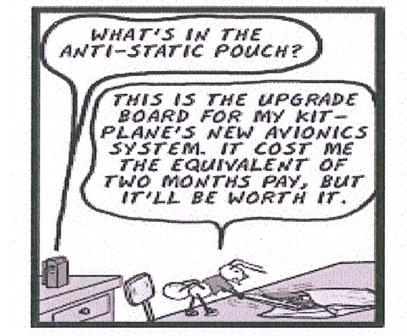
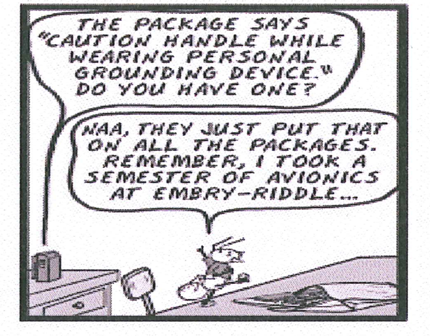
I’m sure many of you have noticed movies that replicate the patterns, plots, themes, and scenarios of the blockbuster shows. Today’s predictable formulae might involve guns, car chases, government conspiracies, and of course the 2 minutes of sexual this-or-that, never mind the plot. Another subtle pattern you’ve likely noticed is the role of the supporting hero; you know, the one who comes up with that tantalizing bit of information that seems to break the logjam of suspense. A long running favorite for this role is the computer geek/hacker who seems to easily penetrate any system and after a furious 100-words-per-minute staccato keyboard performance, the antagonists are as good as wet toast. Another emergent supporting-hero-favorite is the forensics expert. Of course, if the role is that of a computer forensics expert, the actor/actress will likely be up for an Academy Award. So, how about forensics for ESD, does it exist?
If I have to explain what Electro-Static-Discharge is, and its danger to ESD sensitive aircraft parts, then this is probably not a blog for you; I’m going to avoid a long droning theoretical explanation of the phenomenon. Rather, I want to point out real world issues that hopefully heighten your awareness of the menace for your employees, and aid you in your training of the topic.
It is estimated that in today’s electronics environment, up to 60% of device failures are ESD caused1. This statistic is not for aviation alone, but for all electronics market segments. So, does it apply to aviation? I am not aware of any studies or statistics that could authoritatively address the question. Forensics to determine whether failures of aviation electronics are ESD-caused do exist, so why don’t we have a better handle on this peril? The fact is we can’t afford it. We want the failed part fixed and back in service as quickly as possible and at the lowest price. Otherwise, every Avionics Repair Station would have to be equipped with scanning electron microscopes and the specialized equipment to disassemble integrated circuits at the microscopic level in order to scan it for ESD damage…quite unlikely. To be clear, it is not being suggested that this level of forensics be applied to every failure in order to quantify the issue. What should be emphatic is that the degree of ESD caused failures is not routinely or authoritatively quantified, so the 60% figure may be applicable at best, or understated at worst. If so, how observant are your employees regarding ESD protective processes and procedures?
ESD sensitive parts that have been damaged will manifest such damage in one of several ways upon being installed on the aircraft:
a) Immediate failure of the part when the component/system is tested.
b) The part fails much sooner than its designed Mean Time Between Failure (MTBF) figure.
c) The part exhibits intermittent or random failures.
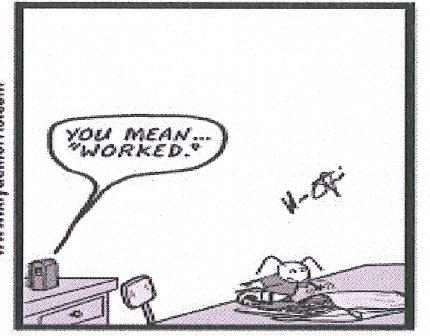
For those you who are or have been avionics technicians, you absolutely abhor intermittent failures; the rule is it never fails when you’re working it, right?
Just as significant is the potential for ESD caused failures to contribute to a part becoming a rogue or chronic part due to its many as-yet uncorrected failures. This is tied to the part’s intermittent or random failures. There is another blog devoted exclusively to Chronic and Rogue parts; check it out at this link:
http://www.aviationsuppliers.org/index.asp?bid=222&BlogEntryID=19&FormID=300
A major factor contributing to ESD damage is lack of heightened awareness regarding the ease in which damage occurs. For example, the average person can feel a discharge on a doorknob if it is greater than 3500 volts; hear the discharge if it is greater than 5000 volts, and see it if it is greater than 8000 volts. By comparison, damage to integrated circuits occurs at fractions of those voltages. This means that the person imparting the damage will not have felt, seen or heard the discharge; nobody knows it occurred, and there will be no forensic investigation of the fact.
How about parts just removed from the aircraft? Do your Technicians immediately put on the ESD caps, or does the unit get shipped all the way to the repair shop sans caps? If so, they may have just raised your repair costs by causing additional damage not related to the removal reason. Ask your repair shops how often this occurs, it may surprise you.
Finally, I’ve got to say it, I have noticed that at Airlines, Repair Stations, and Distributors, there seems to be a lack of familiarization among internal quality auditors with their own published ESD procedures. If so, this too contributes to our lack of being able to quantify non-compliance and therefor its likely effect on product reliability and cost, and as we all know, we can’t fix what we can’t quantify, or can we?
For the Distributor/Stockist community, I’m pleased to report the ASA is working on a Best Practice for ESD protection in the workplace; it will be available later this year. Of course there are many ESD Standards, but this no attempt to be a standard; rather a simple Best Practice document available exclusively for Distributor/Stockist operations.
For the novice, all this should be shocking; I’ll not remain static on the subject, I must discharge my duties.
Your comments left here are most welcome.
1ESD Control Handbook, Static Control Measures; 3M Corporation.
Roy RESTO DETERMINING THE ENGLISH-SPEAKING PROFICIENCY OF AVIATION APPLICANTS AND EMPLOYEESPosted By Roy Resto | January 08, 2014
I was once in Miami and a friend shared a story. He works in a Repair Station there that performs maintenance on aircraft, and has frequent FAA visits. It seems one day an FAA Inspector expressed concerns to him that he had doubts some Repair Station Technicians and Inspectors could competently comprehend English as contained in Quality and Maintenance Manuals. The person responded; “Then why did you issue them A&P and Repairman Certificates?” It is, after all, the FAA’s responsibility to determine such competency before issuing the certificates. I’d caution at this point to resist the temptation to think this is an example of Inspector bias or variation in interpretation of regulations…it is not.
In most parts of the world, English is the international language of aviation. Flight Deck instruments are in English, as are flight manuals and maintenance instructions. The process of communication is very fragile and subject to varying levels of understanding at the slightest nuance of expression or interpretation. We all know of person’s who speak English as their primary and only language, yet we can’t quite understand them; Yogi Berra and Leo Gorcey of the Bowery Boys (http://en.wikipedia.org/wiki/Leo_Gorcey) comes to mind, both of whom easily massacre the English language in expressing themselves. Fortunately neither turned wrenches or yokes.
The FAA has an Advisory Circular 60-28A titled “English Language Skill Standards Required by 14 CFR Parts 61, 63, and 65”, and it makes proper reference to the efforts of the International Civil Aviation Organisation (ICAO) to establish a basis for evaluating English language skills, and has 6 levels of Proficiency. Level 1 being “Pre-Elementary” and 6 “Expert”. The acceptable minimum level of proficiency is 4 “Operational”.
To establish a person’s proficiency level, they are evaluated in 6 areas: Pronunciation, Structure, Vocabulary, Fluency, Comprehension, and Interactions.
For example, at “Operational” Level 4, “Fluency” would mean”
The more you peel back the layers of ICAO’s efforts, the more you’ll be impressed with the science it brings. More than that, whether an employer, the FAA, or any other CAA, the ICAO literature brings a level of standardisation that when followed, levels the playing field.
So, you ask, how do I administer a test? According to AC 60-28A:
It could be that easy.
For pilots we all understand that there can be no compromise in this process, but what about certain maintenance technicians? It turns out there is some latitude. According to AC 60-28A:
Although there are some in the aviation community who would question why a person who failed the English test should be granted a certificate as reflected by this Regulation, and yes it is an FAR, I have to say I support it wholeheartedly, and it’s based on my own experiences. I recall one example I had when working for a major airline many years ago. I was doing a Quality Station Audit of our operation in Mexico City and spent a couple of days with the line maintenance staff consisting of all Mexicans, very few of which spoke passable English. I was very impressed with their technical acumen and compliance with published maintenance manual procedures. I quickly learned from this and other experiences that I should not judge a technician’s technical competence based on his inability to express himself precisely in English.
On the other hand I have to hand it to air traffic controllers who deal with international traffic. I’ve heard a lot of exchanges that left me scratching my head as to what was said. That’s another good reason for the expansion of pilot-controller text messaging that is slowly gaining operational implementation; it called CPDLC-Controller-Pilot Data Link Communications. These text messages don’t have heavy accents, slang, or intonations. Neat, huh?
So what’s your opinion about this stuff? Leave a comment on this web site. You can do so anonymously if desired.
Over ‘n out
Roy “Royboy” Resto Fully Profiled on Linked In at: AIR CARRIER RELIABILITY PROGRAMS UPDATEPosted By Roy Resto | December 11, 2013
For those of you involved in Airline Reliability Programs, and particularly for those who attended my session titled “Deferrals Per MEL and Airline Reliability Programs” at the 2013 ASA Conference, I want to give you an update on efforts to revise key FAA Advisory Circulars.
In 2005 there was an accident involving a Turboprop which crashed into a department store garden center shortly after takeoff from Manchester-Boston Regional Airport (MHT). The aircraft was destroyed and the pilot of the cargo flight was seriously injured. The National Transportation Safety Board (NTSB) determined that the probable cause of this accident was the pilot’s misapplication of flight controls following an engine failure. Contributing to the accident was the failure of the engine’s sun gear, which resulted in the loss of engine power. Contributing to the sun gear failure were the engine manufacturer’s grandfathering of previously recommended, but less reliable, maintenance standards, the Federal Aviation Administration’s (FAA) acceptance of the engine manufacturer’s grandfathering, the operator’s inadequate maintenance practices, and the FAA’s inadequate oversight of the operator. The NTSB subsequently issued Safety Recommendations A-09-108 through -111. In its report, two of the NTSB recommendations were that the FAA:
FAA AC 120-16 is titled “Air Carrier Maintenance Programs”
FAA AC120-17 is titled “Maintenance Control by Reliability Programs”
According to a recent Federal Register notice, the FAA assigned a new task to the Aviation Rulemaking Advisory Committee (ARAC) to provide recommendations regarding the outdated AC 120-17. According to feedback I received, this group had its first meeting in the beginning of December 2013.
For all of you involved in US Part 121 Airline Reliability Programs, I have no doubt your written procedures includes a reference to AC 120-17. Although this AC was a significant and historic contributor to Reliability Programs, this AC is in fact quite outdated at its current “A” revision dated March 27, 1978. Among the AC’s many outdated passages is a key reference to the ATA’s equally historic Specification MSG-2 (Maintenance Steering Group) titled “Airline/Manufacturer Maintenance Program Planning.” The latest version of this document is MSG-3.
It will likely take some time for the final revisions to be published. Regardless, this is a welcome updating of this significant AC.
Your comments are welcome on the blog site.
Roy RESTO |