CAVU Café: Royboy’s Prose & Cons, Page 15 of 17 The views expressed in CAVU Café: Royboy’s Prose & Cons blog are those solely of the writer and are not necessarily shared by the Aviation Suppliers Association or the Association’s staff, members, or Board of Directors. About Roy Resto The Power of FreeText on Your Purchase OrdersPosted By Roy Resto | October 23, 2012
Do you, like me, ever get annoyed by those pesky, over used buzz words or phrases? “…on the same page”, “Think outside the box”, and “Core Competencies” come to mind. One that I frequently see rearing its syllables is “Robust”; i.e. a robust system, design, or part. In aviation we love and need specificity, and the use of that over-used term begs for definition when used…but it seldom is, thus the annoyance. So, just how robust is your Purchase Order system?
Among part suppliers such as distributors, a persistent root cause contributor of rejected parts by customers is failure to have listed known special requirements on the Purchase Order, and we’re not speaking about standard Terms and Conditions. Here’s a perfect example: You know that your customer will only accept Shelf-Life limited parts with a minimum of 85% Shelf Life remaining. You contact a supplier who assures you all their parts in stock meet that requirement. Thus assured, you issue a PO, and two weeks later the parts arrive. Your Receiving Inspector then, of course pulls up the PO information, and other than the boilerplate Terms and Conditions, see’s there is only quantity and part number information to cross check. The Inspector then completes the visual check of the parts and serviceability documentation, and satisfied, proceeds to ship the parts to the customer who promptly rejects them because there is less than 85% remaining shelf life. The Inspector did not know to check for this because the person issuing the PO did not take the time to enter this information.
To the best of your knowledge, this is the only customer you have with this peculiar requirement, and then it only applies to those instances when they purchase Shelf-Life Limited parts. So why didn’t the person issuing the PO put this requirement in? After all, the system has the capability to enter free text if needed. No doubt those of you with accredited or certified quality systems already have procedures which require the purchaser to list such special requirements on the PO. Published procedures aside, here are the three primary reasons to list those peculiar requirements on your PO:
Unquestionably, when Purchasing Organisations start to consistently adhere to this requirement, there is a corresponding drop in customer rejects. Unfortunately, when root cause analysis is performed on customer rejects, this causal factor is frequently overlooked or hid by the offending party. If your organization is prone to “round up the usual suspects” behavior rather than sincere root cause analysis, the lowly supplier will get the blame. There, I said it and I meant it.
Some of the customer special requirements I frequently observe being overlooked on PO’s include this short list:
As I write this and sip my robust- tasting coffee (supposedly meaning full-bodied, but I don’t know what that means either), I want to comment on your boilerplate PO language, variously called Terms and Conditions. There is the temptation to add such rare requirements (such as the 85% shelf life example) to every PO just to forget about the detail. The problem with that is you’ll eventually end up having a 5 page PO with 4 point font language no one reads; you dilute its effectiveness.
So, just how robust (meaning vigorous; meaning energetically performed) is your system? Can you enter this information as free text, or perhaps pull-down descriptors? Those all require manual intervention and discipline, the lack of which leads me to pen this blog. The best solution is one where every customer requirement is seamlessly (there’s another one of those overused terms) integrated and reflected on PO’s for parts destined to that customer. This solution requires a higher level of automation and the discipline to exhaustively put in the details and keep up with revisions so your purchasing does not have to.
If you’re the purchasing person, hopefully no one knows your customer like you do. Take the time to put in those known unique special requirements; make them conspicuous on your PO.
In corporations where a sales person deals with the customer and a separate person does the purchasing for that customer, hopefully there is no disconnect in transmitting the special requirement to the purchaser for inclusion on the PO. Hmmmm…
I know many of you have developed best practices or have great software programs to mitigate these occurrences. If so, feel free to leave a comment on this blog site. You can do anonymously if desired.
By the way, I prefer Arabica bean coffee over robusta (meaning Coffea canephora) beans.
Over ‘n out
Roy Resto Fully profiled on Linked In RETHINK THOSE AIRLINE MANUALSPosted By Roy Resto | August 21, 2012
If you’re reading this, then this blog somehow made it through the institutional censors. Of course, everyone abhors the thoughts of “censors”, so these guys refer to themselves by the more palatable term “proof readers”. Professional proof readers call themselves Editors, and if you make a living writing, you’d better be careful to appeal to your target audience lest you find yourself edited out the door. OK, enough fun with this sarcasm.
Businessmen and academia are perpetually analyzing the differences between legacy carriers and low cost carriers, and the contribution of those differences to profitability or the lack thereof. Having worked in both airline and MRO operations, there is one practice I’ve observed that perfectly illustrates an example of the demarcation of legacy and low cost airlines; many legacy airlines continue to cling to the practice of requiring their MRO shops to use their airline-specific component maintenance manuals, whereas the low cost carriers tell their MRO shops to use the OEM’s Component Maintenance Manuals (CMM’s).
Airlines that have their own component maintenance manuals call these manuals by various titles which include: Engineering Orders, Engineering Specification Orders, Engineering Repair Authorizations, Central Engineering Manual, and Engineering Specifications. These manuals usually contain information that is specific to that airline such as repairs, inspections, modifications, or part numbers that are variations of the OEM’s CMM. These manuals typically evolve because of the airline’s effort at operational and product improvements, and employee suggestion programs.
Before we go any further down the path I’ve suggested with this blog, I’d better point out two things before someone starts wagging their index finger at me. We all know there are FARs requiring repair stations to perform their work in accordance with the operator’s manual when the operator specifies such manuals; understood and acknowledged, and yes it will be so accomplished. The other is that I have to speak in generalities, so I must acknowledge that there are variations in carrier size, legacy or low cost, as to the use of these manuals. Nonetheless, for the purpose of this blog, I’m sticking to the characterization of legacy and low cost carriers I made earlier.
Consider this quick, yet characteristic example:
If you have hundreds or perhaps thousands of those manuals, just the administration of those manuals is likely an intricate process.
Is that it? Lets amplify this a bit.
For those hundreds or thousands of airline manuals, the airline will have to:
Is the bureaucracy and additional costs of this arrangement coming into focus?
Predictably, if you desire to eliminate this system, its biggest defenders will be those whose turf is being threatened. They may even cite the “S” word (safety), and that the airline has enjoyed operational advantages because of this system. Oh really? I don’t seem to recall that legacy airlines using these systems have any advantage in safety statistics, dispatch reliability, unit costs, or on-time performance, over the Low Cost Carriers (LCC). Hmm...
Lastly, unquestionably, there are situations where the airline must issue maintenance instructions not contained in any other OEM manuals, and for these their choice of ‘airline manual’ (ESO’s, EO’s, etc.) must be issued.
Legacy airlines who are in or threatened by bankruptcy, or LCC’s, must make hard choices regarding operational changes that can potentially contribute to greater efficiency. This blog suggests that eliminating these burdensome and bureaucratic systems will make their operations more efficient, reduce their repair and overhaul costs, and make their surplus inventory more marketable.
I have an airline buddy who actively participated in his company’s suggestion program. He informed me that the idea presented in this blog was the frequent subject of many suggestors...to no avail. When employees from different quarters make the same suggestion, the light should come on, somewhere, so why weren’t these approved? The defenders were too entrenched and numerous; music to ears of LCC’s.
♫ “And the band played on...” ♫
(Lyric from the Temptation’s, Ball of Confusion) FAA Inspector Variations
Posted By Roy Resto | May 29, 2012
I’ve been to quite a few, various trade shows these last few years, and it seems the subject of FAA inspector variation comes up with some regularity. You know, the stories about how different FAA inspectors interpret the regulations varyingly.
Now, before we proceed any further, I want to state my experience with inspectors whom are not FAA employees, in order to hopefully qualify this blog. While at a major airline, I was at one time in charge of all the inspectors at a huge Maintenance and Engineering Base. The supervisors and inspectors I directed were in Engine Overhaul, Aircraft Overhaul, Components, Receiving, Internal Audit, and NDT. I was also, in an earlier time, a full CASE Level III auditor. I’m still in the Air Force, and I’m on “Red- X” orders, which is equivalent in the civilian world to being an RII (Required Inspection Item) authorized Inspector. I’m also a FAA DAR (Designated Airworthiness Representative; not an FAA employee) for inspection of parts. So, in the non-FAA world I hope you would agree that I’ve been around a lot of inspectors.
Indisputably, as long as humans are involved in processes, there will always be some variation in the product, including inspections or interpretations of written language. When the inspection or interpretation involves a ‘black or white’ issue, the outcome is predictable and variation is minimized. When the issue is ‘gray’ however, things start to get interesting.
THE REAL WORLD:
By now I’m sure a few of you have smiled wryly at these or similar experiences. In fact, variations exist in all aspects of aviation; Commercial, General Aviation, Military, and Government. Because of this, it upsets me that some people speak of FAA inspector variations as if it were a behavior peculiar to them exclusively. If such critics would couch their desire to minimize variations in the broader sense, to include all inspectors and auditors (not just FAA), it would represent a more balanced and noble effort. But noooooooooo, let’s go out there and pick on a narrow segment of our industry.
Some more personal experiences: During my career I’ve worked with about 5 FAA FSDOs and MIDOs. Without question, their level of standardization is infinitely more impressive than the complaints expressed at some trade shows.
I heard a Pastor say one time that when you point your finger at someone, there’s three pointing back at you, hmmm. AUTONOMIC LOGISTICS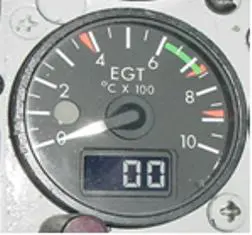
Posted By Roy Resto | April 06, 2012
If you’re like me, you likely read the title as “Automatic” rather than “Autonomic”. On closer examination of the term, I had flashbacks to my youthful days in Biology class. For those physiology aficionados among us, the term “Autonomic Nervous System” will be familiar. The organs of our body, such as the heart, stomach and intestines, are regulated by a part of the nervous system called the autonomic nervous system (ANS). The ANS is part of the peripheral nervous system and it controls many organs and muscles within the body. In most situations, we are unaware of the workings of the ANS because it functions in an involuntary, subconscious reflexive manner. For example, we do not notice when blood vessels change size or when our heart beats faster. In other words, the ANS works behind the scenes of our conscious to keep things regulated largely without our manual intervention. And so it is with Autonomic Logistics.
I’m writing this blog because the F-35 Joint Strike Fighter is being fielded with what is being heralded as an advanced Autonomic Logistics Information System (ALIS). If so, the model will be a harbinger of logistics systems that will cascade into civilian uses. The fundamental elements of Autonomic Logistics are not new. ALIS has built upon those fundamental elements significantly, which is the basis for its attention – getting innovations, but I have gotten ahead of the story. An essential cornerstone element of the system is a concept known as Predictive Maintenance, PM (PM is called different names by different sources but for ease of reference we’ll just use PM). What follows is a historical perspective and introduction to PM.
HISTORICAL AND INTRODUCTORY OVERVIEW OF PM:
Simply put, PM systems should be able to predict the failure of an aircraft part before it happens, and will be tied to a specific part on a specific tail number. Cool, huh?
Most turbine engine designs include provisions for monitoring an engine’s EGT, or Exhaust Gas temperature; a critical measure of the performance of the engine, among others. The information is presented to the flight crew for monitoring. Of course there are lower and upper limits for EGT for a given engine operating profile. This data is tapped, digitized, and then transmitted during flight by a system called ACARS (Arinc/Aircraft Communication And Reporting System). ACARS transmitted information is then received on the ground and sent to the airline’s Maintenance Operations Control center for analysis. A graph for that engine may reveal that the EGT during the last week is starting to creep toward the upper limit; an indication of a deteriorating condition, that if left un-addressed could cause an interruption in that aircraft’s schedule, or worse, an unexpected engine change, diversion, or cancellation. At this time, the airline would dispatch mechanics to the aircraft at an overnight maintenance station to perform a borescope inspection, and to take the appropriate action ahead of the failure, an infinitely more manageable situation than an unexpected failure. The concept started to be applied to other systems besides engine installations, by Boeing and Airbus among others.
The question is, what data is available on board the aircraft for transmission to the ground for PM analysis? An early consideration was the data already being collected by the Flight Data Recorders (FDR’s). Although some of it may be of the type usable for PM programs, it was not designed specifically for that purpose. Aircraft systems are currently being designed to output information that are suitable for PM programs. Early examples of these systems included Boeing’s Aircraft Health Monitoring System (AHM), Airbus’s Aircraft Condition Monitoring System (ACMS/AIRMAN), and HUMS, Health and Usage Monitoring Systems used and developed by various firms for Helicopters.
Notice that both manufacturers are attempting to quantify the estimated savings of the systems, this because currently these systems would require an investment by the airline to make it work. If you do the math, for a large airline the savings could indeed be significant.
PM: What’s needed?
Airline Maintenance Engineering operations have departments to monitor “Reliability” trends. For example, if component removals from aircraft for a certain ATA chapter start to trend negatively, flags are raised to attract attention to the causes. This is a classic statistical monitoring system. Reliability programs can predict that during a given period of flight hours you’re going to have given amounts of removals, but it cannot tell you when, or to what components it will happen. Enter PM programs as described.
To summarize, PM programs can provide:
And that’s the historical as well as introductory overview of PM. Whatever you call it, the OEM’s have continuously built upon PM concepts and integrated it into management, engineering, operations, and logistics processes. Such is the case with the F-35 Autonomic Logistics Information System, which seems to have taken these concepts to its current, advanced concept.
According to Lockheed Martin,
But what about the “Autonomic” in ALIS?
ALIS reduces logistic delay times by automatically generating appropriate actions with notice to system managers, just as the human nervous system operates the body with unconscious control by the brain.
In the commercial world, integrating PM with Logistics is gradually gaining acceptance whether the aircraft you fly are Boeing, Airbus, Business or Helicopters. The programs being offered for such management programs remain largely an option for the operator, and in fact have only been applied by most operators to a given, relatively small fleet. ALIS on the other hand, will not be optional; it will be integrated with the product aircraft, and the most interesting and challenging aspect is that there are expected to be as many as 4,500 aircraft, a huge fleet compared to commercial operators. Companies involved in any aspect of the ALIS logistics chain, whether manufacturing, distribution, or MRO can expect unprecedented access to information regarding the ‘big picture’; information that is real-time, predictive, and empowering.
In summary, the primary reasons to monitor the implementation of ALIS are its autonomic features, that it is not optional, and that it will apply to an entire fleet, as many as 4,500 aircraft; it encompasses advanced features on a huge scale. As far as the historical chronology of the development of Predictive Maintenance-Logistics systems goes, ALIS will no doubt be looked upon as a major contributor.
1 http://www.lockheedmartin.com/us/products/ALIS.html Doolittle: Aviation LegendPosted By Roy Resto | December 05, 2011
Permit me a momentary departure from my usual blog themes with this one. For those of you who enjoy aviation history, I hope you’ll enjoy it.
I have a few pieces of aviation art I would consider to be collectables. A numbered print I have is called “The Doolittle Mission”. It is signed by one of my hero’s, Jimmy Doolittle. I purchased it the day after he passed away. It shows a B-25 Bomber lifting off the Aircraft Carrier Enterprise followed by the others on their way to a secret mission for a first-ever strike on the homeland of the nation that had just attacked Pearl Harbor. I will surely understate the enormity of the moment. Imagine, just 5 months after the demoralizing attack, with America in the throes of repeatedly depressing news of continuous losses in the Pacific War, there stood Doolittle’s bombers about to deliver what the enemy military assured its population could not happen; Aerial bombardment. It happened, and with that one raid, national malaise turned to ardent fist-pumping determination. After the raid, all the aircraft crash landed after having run out of fuel with most crews bailing out successfully over China; there was not enough fuel to return. Some crews were captured by the enemy, some were executed. The mission was a crazy idea and many thought it suicidal. Not Jimmy. He was awarded the nation’s highest respect, the Medal of Honor. This alone is the stuff of heroes, but there is much, much more to Doolittle, and did you know the connection between Doolittle and General George Patton; between Doolittle and Paul Tibbets? Read on.
Before the war, Jimmy was already a hero, yes a national treasure. In fact it was never intended that such a person be allowed to participate in such a risky, dangerous mission. In a short period he taught and led the raiders, and only through his own crafty, verbal slight-of-hand between two Generals did he talk his way into actually flying, as well as leading the mission.
Consider that before the war as an aviator:
Consider these tidbits after the Tokyo Raid and during the rest of the war:
Do you remember the famous story of the Memphis Belle B-17? They were the first air crew to complete 25 missions at a time of high losses; before that the flying toll was so terrible that no crew had attained that goal. 25 missions was the supreme goal for all aircrews; you made it then went home (but still in the Army). Later in the war due to many changes in strategy and successes, those losses significantly diminished and serious thought had to be given to extending out the 25 mission milestone. Guess who took responsibility for that? Yes Doolittle extended it a couple of times; not an endearing act to his troops!
And Patton?
Doolittle was in command of the air forces which many times directly supported Patton’s fiery onslaught on the ground. They first met in North Africa which was America’s entre into the fight against the Nazi’s. Exchanging of communique letters between battlefield commanders was common, and in those between the two, they were on a first name basis; Patton preferred to be called “Georgie”. Most of us recall the infamous chapter in Patton’s life when he was removed from duty due to an incident where he struck a soldier he had considered cowardly. In what may have been Patton’s lowest, darkest days,
Doolittle recalls in his book:
That was Jimmy, and that was Georgie.
Did you know there was also a connection between Paul Tibbets and Doolittle?
Paul Tibbets was the pilot famed for having flown the Enola Gay B-29 on its mission to drop the first atomic bomb. Tibbets was a skilled pilot that had gained notoriety in the European theater; in fact he at times was the personal pilot for Dwight Eisenhower, the Supreme Allied Commander. At one point the B-26 Marauder Medium Bomber was being introduced into service. It had gained the unfortunate reputation among aircrews as a ‘killer’; not of the enemy but of aircrews in accidents. Jimmy, who had considerable experience with the Marauder, thought this plane was ‘just another aircraft’, and set about to prove it. On one occasion he had the opportunity to take Tibbets for a ride, and Tibbets recalls in his memoirs:
By the way, during the winter of 2010-2011, I had the honor of being deployed overseas and serving under a Grandson of Tibbets, Colonel Paul W. Tibbets IV of the USAF, while he was Vice Commander of the 379th Air Expeditionary Wing.
If that was all, it would have been a legendary story already, but after the war Jimmy remained very active in aviation. He served on many aviation committees for various Presidents which helped shape the modern aviation transportation systems we enjoy today. He remained active in the military in the reserves, and worked to make the Air Force the separate branch that it is today. He also became the first Reserve Officer to become a Four Star General, and was the first President of Air Force Association. In 1989 he was awarded the Presidential Medal of Freedom.
Doolittle’s closest friend and supporter was his sweetheart wife Josephine, who he always referred to as ‘Joe’. At first, Joe’s family was not supportive of their daughter marrying a daredevil stunt pilot, but they quickly got over that.
At the age of 96, General Jimmy Doolittle died at his home in Pebble Beach, California, on September 27, 1993. Befitting his impact on U.S. aviation history, Doolittle was buried with full military honors in Section 7-A of Arlington National Cemetery, with his high school sweetheart, Josephine Daniels Doolittle (May 24, 1895 - December 24, 1988).
1. Doolittle, General James ‘Jimmy H., with Carroll V. Glines, I could Never Be So Lucky Again”, New York: Bantam Books, 1991, Page 336)
2. Tibbets, Paul W., with Clair Stebbins and Harry Franken, The Tibbets Story. New York: Stein and Day, 1978, p.123.
TRENDS IN MRO AGREEMENTSPosted By Roy Resto | November 15, 2011
In a letter written in 1796 by the famous British Admiral Horatio Nelson, he makes an appeal to the ruling politicians to reconsider an order they had given for the Navy to evacuate the Mediterranean; the reconsideration based on a change of affaires in the region. In fact, rather than withdrawing, he recommends making a vigorous and desperate attempt to defend the area, led by Naval Officers exhibiting “more than common resolution”. It is in this letter that he utters his famous quote “desperate affaires require desperate remedies.” A more commonly cited proverb today is “Desperate times require desperate measures.” That we are in desperate times today does not require a vigorous defense. On the other hand, current remedies and measures being taken require a degree of contemplation. And so it is with some emerging trends in MRO RFP’s (Maintenance Repair and Overhaul, Request For Proposals), Agreements, and Contracts. Let’s exam some of those trends.
TREND: Your ability to get the MRO contract may be greatly influenced by your ability to buy the inventory and lease it back.
Airlines often have a mixture of aircraft that are outright purchases, and aircraft that are leased. This actually provides a degree of financial flexibility. For example, in bad times the airline can return leased aircraft to the leasers. The airline can also sell their purchased aircraft to a leaser and ask that they lease it back to them. Result? The airline just raised some cash and still maintained their capability to operate. In the Aircraft and Engine world this is not news, but this ability to raise cash has crept into other aircraft subsystems, and is increasingly coupled to MRO contracts. For example, an airline puts out an RFP for repair and overhaul of a family of parts. Conspicuously within the RFP is a Damocles-sword statement that, among other factors, “The selection of the successful Supplier may be influenced by the Supplier’s ability to purchase the entire inventory of affected parts, both spares and installed parts…” This reminds me of the military, when a higher ranking person comes up to you and says “I need you to volunteer to do this;” it’s a veiled order. There are several issues to be carefully considered before entering into this arrangement:
TREND: Pressure to buy extra spares for the use of the operator
For any airline, the level of spares is constantly being evaluated. If the operator is under-spared, what actions can it take? If a new MRO contract is out on RFP, the operator can ask for leaner turn-around-times. This would certainly alleviate the pressure to purchase more spares. The operator can also infer that the Supplier buy the necessary amount of additional spares to keep its maintenance stations adequately stocked. This trend too, requires careful consideration in these areas:
TREND: Multiple rounds of RFP competition
In an effort to get the very lowest quotes on proposals, some operators have instituted multiple rounds of competition. Here is a likely scenario: An RFP is issued to 12 MRO’s resulting in 8 respondents. The RFP asks the participants to give their very best response. After all have submitted their responses, the operator informs 4 of the respondents that they are in the final 4 and establishes a new deadline for those 4 MRO’s to amend their quotes to remain competitive. This may even extend to a third round with the final 2. Here’s some counsel:
TREND: Pricing concessions embedded in the Terms and Conditions
It used to be that the T&C section was boiler-plate legal lingo quickly reviewed and approved. The trend is to embed language that further chips away at the thin margin an MRO Supplier is exhibiting. Such language may include:
TREND: Increased use of penalties
On the way into work recently I heard a radio station news story which revealed that certain cities, in an effort to gain more revenue, had placed new emphasis on issuing tickets for speeding, parking, and driving violations. It seems that certain operators have tapped into this phenomenon in a new effort to raise revenue. It comes in the use of language in contracts or agreements for penalties. These ‘speeding tickets’ typically address:
In the darkened corridors of airline maintenance operations centers, fewer topics arouse more passion than discussion of delays and cancellations charged to maintenance. For example, a delay or cancellation due to lack of parts, or a part was replaced that failed upon installation and testing (AKA Defective from Stock). If the MRO contract has provisions for penalties, these will certainly be triggered.
TREND: The RFQ requesting the MRO provide sensitive financial information on how the pricing was determined.
One of the policies I generally support is that of ‘transparency’; sharing previously un-shared information with employees, suppliers, and customers. Generally, this transparency fosters better relationships and increased open dialog. In this trend however, the operator leverages the information in an attempt to manipulate the pricing. As I learned in Business School, the pricing of your product is one of the most difficult of exercises. In fact, your pricing may represent years of modeling and refinement, and you consider it to be sensitive, confidential, and even proprietary. Do you share it?
If these are desperate times, do these trends represent desperate measures? Your answer likely depends on which side of the negotiating table you are sitting on. If you are an operator fighting for the life of your firm, these measures won’t seem desperate at all, rather the logical actions of a determined business to survive the current malaise at all costs. If you are an MRO, these measures may seem a throwback to the ‘us versus them’ days; a digression from the era where the MRO was courted as a partner, a part of the team, and real awards were given to top performers. Regardless, we are all adjusting to the new environment and relearning through clenched teeth that we should not take it personally, it’s just business. Sign up for that charity golf event with your customer/operator and have some fun.
|